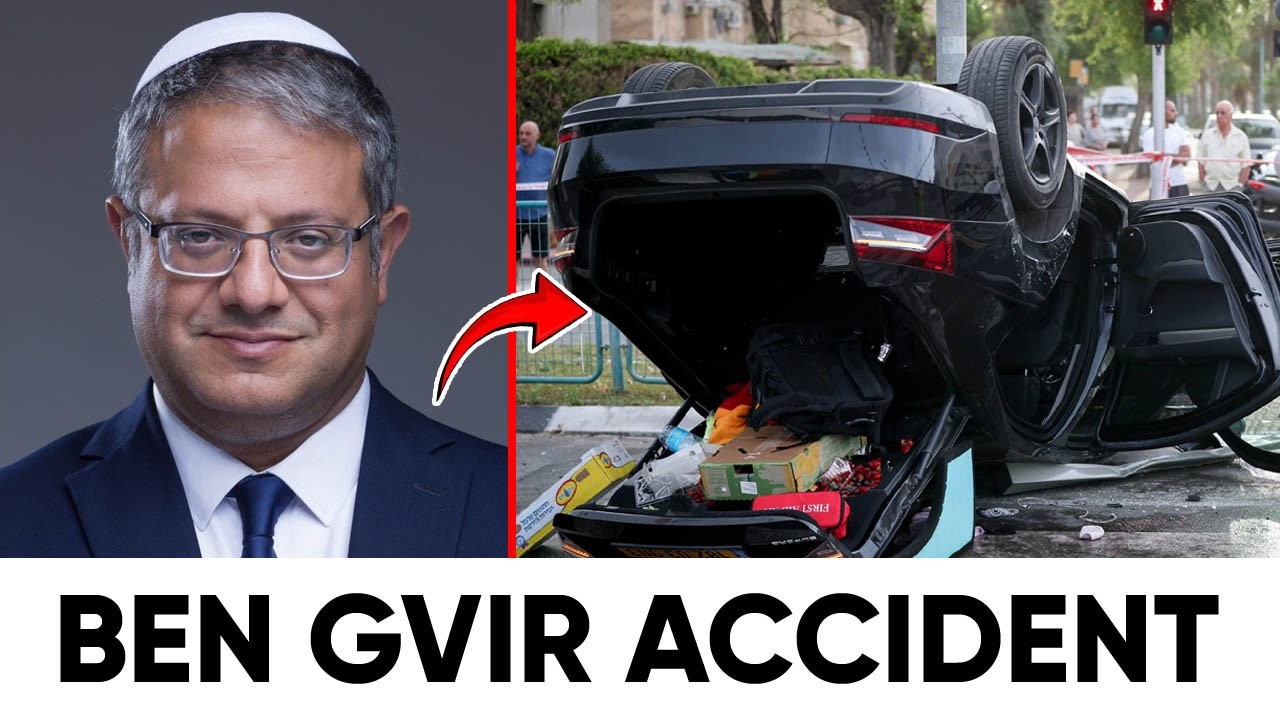
Unpacking the Ben Gvir Car Crash: Separating Fact from Fiction
In an era dominated by rapid-fire news cycles and the pervasive spread of information online, distinguishing between verified facts and speculative rumors has become more critical than ever. The topic of the "Ben Gvir Car Crash" serves as a stark reminder of this challenge, highlighting how a real-world incident can quickly become enmeshed with disinformation, especially when involving high-profile political figures. While Israel's National Security Minister Itamar Ben-Gvir was indeed involved in a traffic accident, the narrative around it was quickly hijacked by unsubstantiated claims of far more dire circumstances.
The core truth is straightforward: Itamar Ben-Gvir was involved in a car crash in April 2024. Crucially, he sustained only slight injuries. However, this fact was soon overshadowed by viral claims suggesting he had been killed, either in the car crash itself or in an alleged Iranian missile strike on his home. These sensational narratives, despite lacking any credible evidence, spread rapidly across digital platforms, demonstrating the powerful and often destructive nature of information warfare in today's geopolitical landscape.
The Truth Behind the April 2024 Incident
On April 26, 2024, news outlets reported that Israeli National Security Minister Itamar Ben-Gvir was involved in a car accident in central Israel. According to official reports and statements from his office, the minister sustained minor injuries and was taken to a hospital for examination. The incident itself, while a significant event for any public figure, was a conventional traffic accident, involving a collision that resulted in his vehicle overturning. Photos circulating at the time confirmed the damage to his car, but equally confirmed that he was alert and speaking to emergency responders.
Despite the clear and consistent reporting from Israeli media and official sources, a parallel and much more sinister narrative began to emerge. Online posts, particularly across social media, falsely claimed that Ben-Gvir had been killed in the crash. Even more alarmingly, these claims were often conflated with allegations that he had actually died in an Iranian missile strike on his residence, with the car crash story being presented as a cover-up by "Israeli media." This immediate leap from a factual, albeit minor, incident to an elaborate conspiracy theory underscores the volatile environment in which information now operates.
It's vital to rely on credible sources when such events unfold. Reputable news organizations and official government statements are typically the first and most reliable channels for accurate information. In this case, their swift reporting on Ben-Gvir's minor injuries directly contradicted the death hoaxes, serving as an important anchor of truth amidst a sea of speculation. For a deeper dive into the immediate aftermath, you might find more context in Ben Gvir Car Crash - Article 1.
The Murky Waters of Information Warfare: Ben-Gvir, Missile Strikes, and Digital Deception
The rapid dissemination of false claims surrounding the "Ben Gvir Car Crash" cannot be viewed in isolation. It occurred against a backdrop of heightened regional tensions, particularly between Israel and Iran. This geopolitical friction creates fertile ground for misinformation to take root and flourish, as adversaries or those seeking to sow discord can weaponize information to achieve strategic objectives.
Indeed, the narrative quickly evolved from a simple car accident to grander, unverified allegations of Iranian missile strikes targeting the homes of Israeli Prime Minister Benjamin Netanyahu and National Security Minister Itamar Ben-Gvir. These claims gained significant traction after figures like former U.S. Marine Corps intelligence officer Scott Ritter asserted their veracity during online appearances. Ritter, for instance, suggested that such strikes demonstrated Iran's successful neutralization of Israeli and American defensive capabilities, making them "blind and deaf."
However, it is crucial to emphasize that these claims lacked any corroboration from Israeli authorities, Iranian officials, or independent verification channels. The spread of such narratives, regardless of their truthfulness, significantly contributes to the "information warfare" domain, where the goal is often to create confusion, sow doubt, and manipulate public perception rather than to inform. This phenomenon highlights how easily unverified narratives can transform into strategic signals circulating across global defense and geopolitical networks, even in the absence of hard evidence. The implications of this information manipulation extend far beyond any single incident, potentially impacting international relations and public trust.
Why False Narratives Gain Traction in High-Stakes Environments
The speed and reach with which false claims, like those related to the Ben Gvir Car Crash and alleged missile strikes, spread can be attributed to several factors:
- Emotional Resonance: Sensational or dramatic news, especially involving high-profile figures and conflict, tends to grab attention and evoke strong emotional responses, making people more likely to share without verifying.
- Confirmation Bias: Individuals are often more receptive to information that aligns with their pre-existing beliefs or biases. In a polarized environment, people may readily accept claims that support their preferred narrative or undermine an opposing figure.
- Speed of Social Media: Digital platforms are designed for rapid sharing. A compelling headline or snippet of text can go viral globally in minutes, long before fact-checkers can intervene.
- Lack of Critical Thinking: Many users consume information passively, without actively questioning the source or seeking corroboration.
- Deliberate Disinformation Campaigns: State and non-state actors often intentionally craft and disseminate false narratives to achieve specific strategic goals, such as destabilizing an adversary or influencing public opinion.
Understanding these mechanisms is the first step in building resilience against disinformation. The very act of questioning a sensational headline or cross-referencing information can significantly slow the spread of harmful falsehoods.
Navigating the News Landscape: Tips for Media Literacy in a Crisis
In an environment where a simple car accident involving a national security minister can morph into a global missile strike conspiracy, developing robust media literacy skills is not just helpful—it's essential. Here are some practical tips to help you discern fact from fiction, especially when confronted with high-stakes news like the "Ben Gvir Car Crash" and related geopolitical narratives:
- Verify the Source: Before accepting any information, especially from social media, check who posted it. Is it an official government account, a reputable news organization, or an anonymous user? Official statements from governments or established media outlets with a track record of journalistic integrity are generally more trustworthy.
- Cross-Reference Information: If a major event is reported, multiple credible sources should be covering it. If only one obscure source is making a sensational claim, be skeptical. Look for corroboration from several independent, reputable news organizations.
- Look for Official Confirmations: In cases involving government officials or military actions, official statements from the respective governments are paramount. The absence of such confirmation for claims like missile strikes on ministerial homes should raise immediate red flags.
- Be Wary of Emotional Language and Sensational Headlines: Disinformation often uses emotionally charged language, all-caps, exclamation marks, and urgent calls to action to bypass critical thinking. If a headline feels too sensational to be true, it often is.
- Check Dates and Context: Old information or images can be repurposed to fit new narratives. Always check the date of publication and ensure the content is relevant to the current situation.
- Understand the "Why": Consider the potential motives behind the information being shared. Is someone trying to provoke a reaction, spread fear, or push a particular agenda? Recognizing underlying motives can help you evaluate content more objectively.
- Fact-Checking Websites: Utilize dedicated fact-checking organizations (e.g., Snopes, Lead Stories, AFP Fact Check) that specialize in debunking viral claims and misinformation.
Applying these principles is crucial for anyone engaging with news, particularly when dealing with volatile geopolitical situations. The integrity of public discourse and, ultimately, international stability, depends on an informed citizenry capable of discerning truth from fabrication. To continue exploring the broader impacts of such events, you might find valuable insights in Ben Gvir Car Crash - Article 3.
The Real Impact of Misinformation: Beyond the Ben Gvir Car Crash
While the "Ben Gvir Car Crash" itself was a relatively minor incident in terms of injuries, the surrounding wave of misinformation highlights a much larger, insidious problem. The rapid propagation of false claims about his death, whether by accident or missile strike, directly undermines public trust in media, government, and even basic reality. When citizens cannot agree on fundamental facts, it becomes impossible to have constructive dialogue or make informed decisions.
The erosion of trust has far-reaching consequences, fostering cynicism, polarizing societies, and even potentially inciting violence. In a conflict zone or a region of heightened tension, such as the Middle East, false narratives can escalate real-world conflicts, provoke unwarranted retaliation, or create panic. For political figures like National Security Minister Itamar Ben-Gvir, being the target of such claims can distract from actual governance, force official resources into debunking efforts, and even pose personal security risks.
Ultimately, the saga around the "Ben Gvir Car Crash" serves as a powerful case study in the modern information environment. It underscores the fragility of truth in the digital age and the imperative for every individual to become a more discerning consumer and sharer of information. The responsibility lies with all of us to promote accuracy, challenge falsehoods, and seek out verified information from reliable sources.